NEWS
When you visit a place to stay, what is it that you remember afterward?
The size of the room, the comfort of the hot spring, the taste of the cuisine, the attentiveness of the staff — all of these are, of course, important.
Yet what lingers in the heart some time after a stay is often not the specifications of such facilities. The quiet air that flowed through the building. The light spilling in through the window. The presence of the land. The impression you could not quite put into words the moment you stepped into the lobby — it is often these that remain in memory far longer.
Art placed in a hotel or inn quietly conveys what makes that place distinctive, and deepens the memory of the stay.
Art Is Not Decoration to Fill a Space
Looking at the walls of a hotel or inn, it is not unusual to feel that “something should be displayed here.”
But when a work is chosen simply to fill an empty spot, the overall impression of the space tends to become scattered. In an accommodation, art — like furniture and lighting — needs to be considered as an element that shapes the very experience of the space.
What matters is not only the beauty of a work on its own. In what kind of light is it seen? From what distance does it come into view? How does it resonate with the surrounding materials and furnishings? And how does the work connect to the values that the property holds dear? It is the accumulation of these relationships that determines the quality of a space.
When art responds naturally to a space, an aesthetic that needs no caption is born.
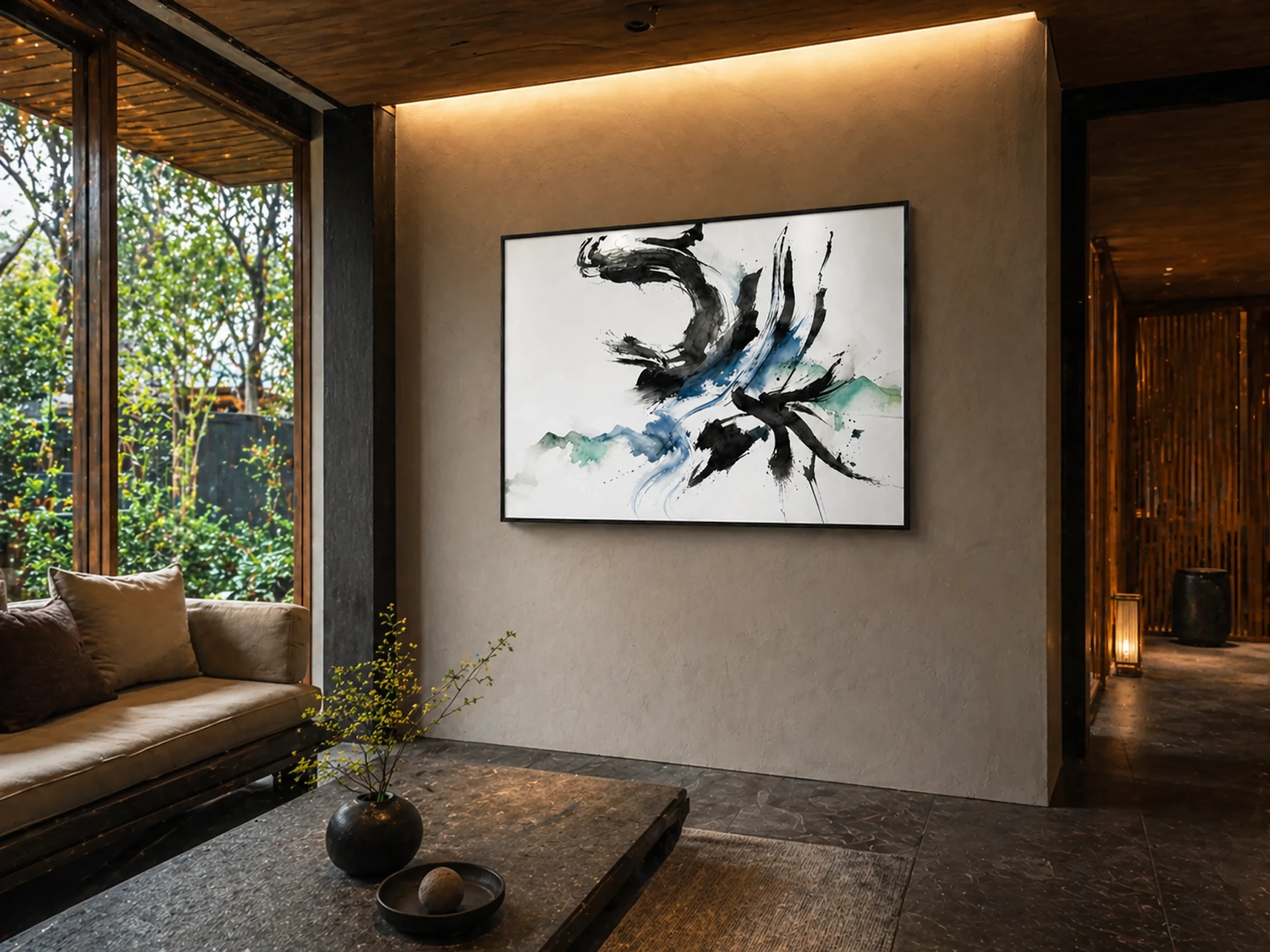
Three Reasons to Bring Art into a Hotel or Inn
1. Conveying the world of the property in the first few seconds
From the moment a guest steps into the lobby, the impression of the property has already begun.
The wall behind the check-in counter, the first surface that meets the eye from the entrance, the path leading toward the lounge — a work placed in such locations conveys, before any words, the kind of time the property offers.
Not lavish staging, but a quiet, deep resonance. A wish for guests to sense the history of the land and a distinctly Japanese sensibility. For such properties, contemporary art rooted in calligraphy brings both tension and calm to a space at once.
2. Creating a story that can only be born in that place
The value of an inn or hotel is not something that is complete within the building alone.
Mountains, rivers, the sea, wind, snow, light. The culture rooted there and the ways of life handed down over generations. It is the background found nowhere else that creates the depth of a stay.
Art, too, begins to hold meaning only when it connects with the memory of the land. A brushstroke that evokes the flow of water. A margin that suggests the ridgeline of a mountain. A single character born from the history of the land or the philosophy of the inn. When a work connects with the story of a region, a space transforms from a mere place to stay into a place to feel that land.
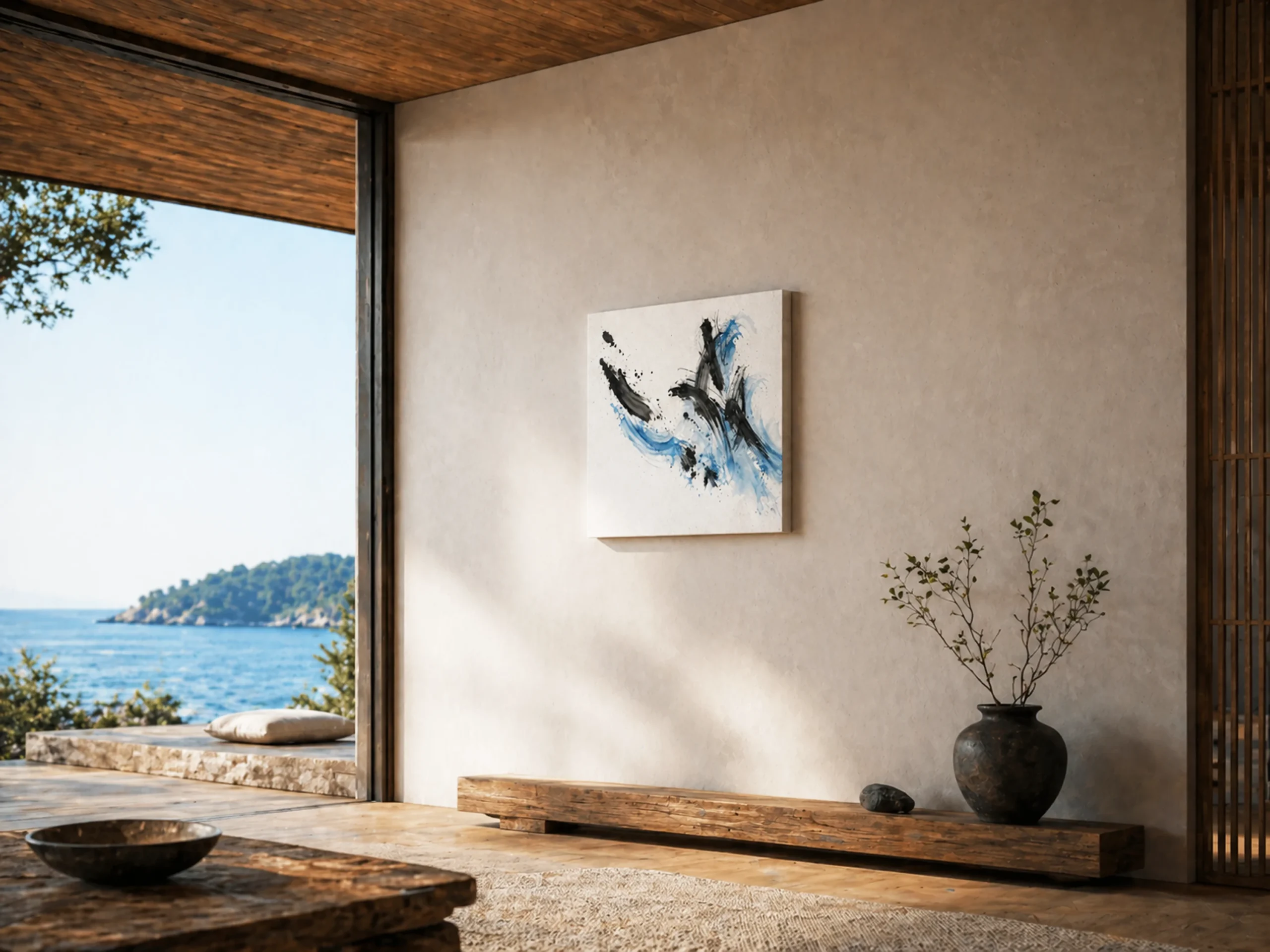
3. Leaving a resonance that remains even after the stay
A striking work continues to remain in memory even after one has left the place.
The emotion that arose on seeing the work. A presence you want to capture in a photograph. A quiet moment that comes back to you after returning home — the value of art in an accommodation lies not only in making a place look beautiful. It lies in deepening the memory of a stay just a little, and in leaving, in a form beyond words, a reason to want to visit again. The accumulation of that resonance nurtures the brand of a property.
The Role of Art Changes with the Place
When introducing art into a hotel or inn, there is no need to treat every location with the same approach. The role required differs from space to space.
Lobby & Entrance
This is the place that first conveys the philosophy of the property. Works with a composition that leaves an impression even from a distance, or that become the center of gravity of the whole space, are well suited here. Works that make use of a large wall, or made-to-order pieces that symbolize the property’s philosophy, are also effective.
Guest Rooms
In guest rooms, it is important not to assert too strongly. A work that shows a slightly different expression each time you look at it, and that settles the heart as you gaze at it quietly. Works with such openness, or that resonate with soft light, suit the hours of rest.
Lounge & Restaurant
In places where people pause and exchange conversation, a work creates the memory of the space. Works with a strong sense of material, or whose shadows shift with the lighting, produce different impressions depending on the time of day.
Bathing Facilities, Spa & Meditation Spaces
In spaces that calm the body and mind, it is important not to add too much information. Abstract expression that evokes the movement of nature — water, wind, breath, circulation — gives a space a quiet rhythm.
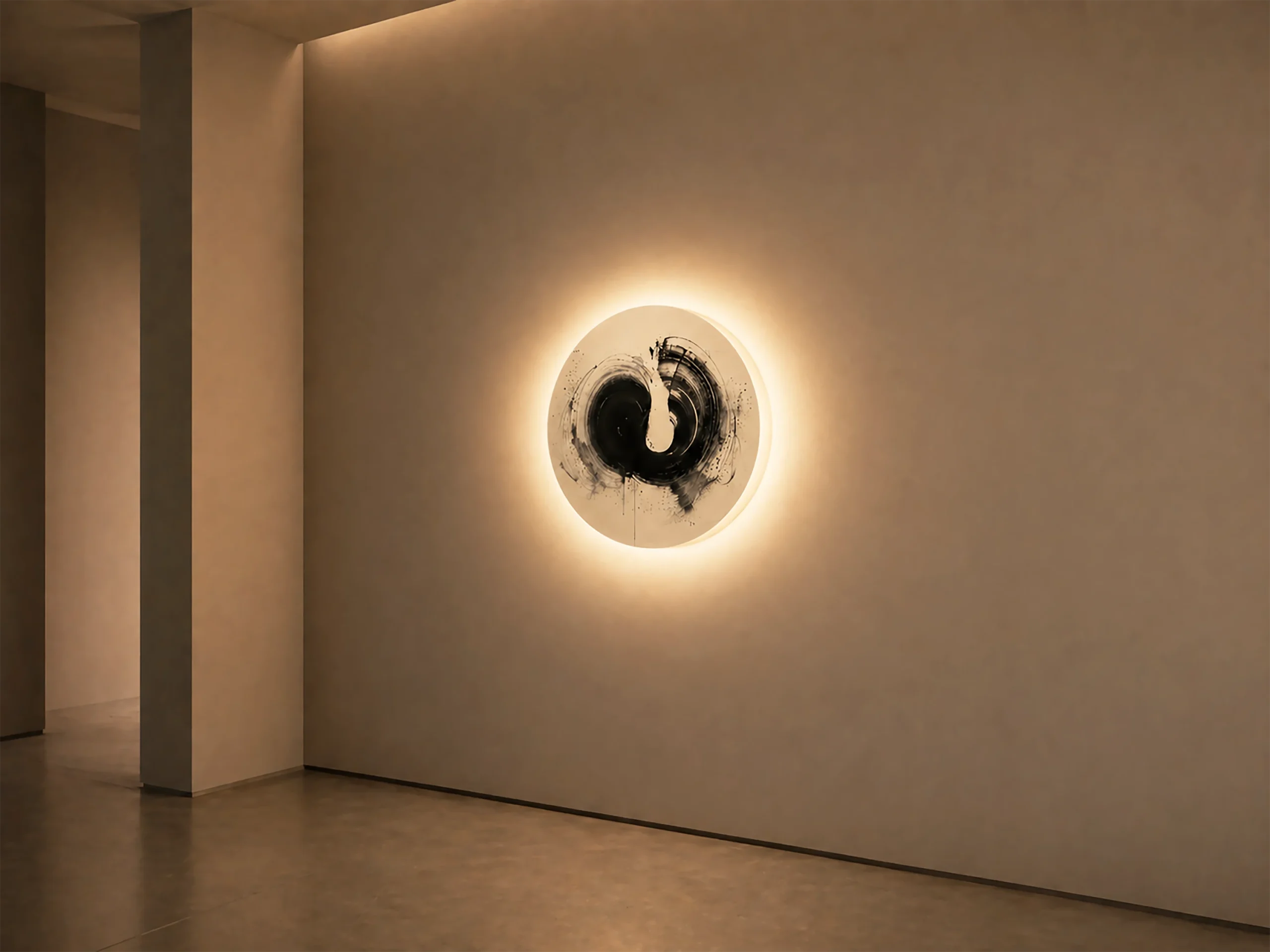
Why Contemporary Art Rooted in Calligraphy Suits Places to Stay
Traditional Japanese calligraphy holds a sense that treasures empty space. Rather than drawing everything in, it gives meaning to the space left behind. Strong lines and quiet white, the shading of ink and the shifting of light, the momentum of a single stroke and the resonance that remains after it — such sensibilities pair well with hotels and inns that wish to deliver a quiet richness rather than excessive ornamentation.
Hakurei is an art project that, starting from traditional Japanese calligraphy, explores contemporary abstract expression. Washi paper, wood, metal, stone, light. Responding to materials and space, we consider the form a work should take for each particular place.
You may choose a single piece that suits your space from among existing works, or we can create a made-to-order work starting from the philosophy of the inn, the memory of the land, or the characteristics of the space.
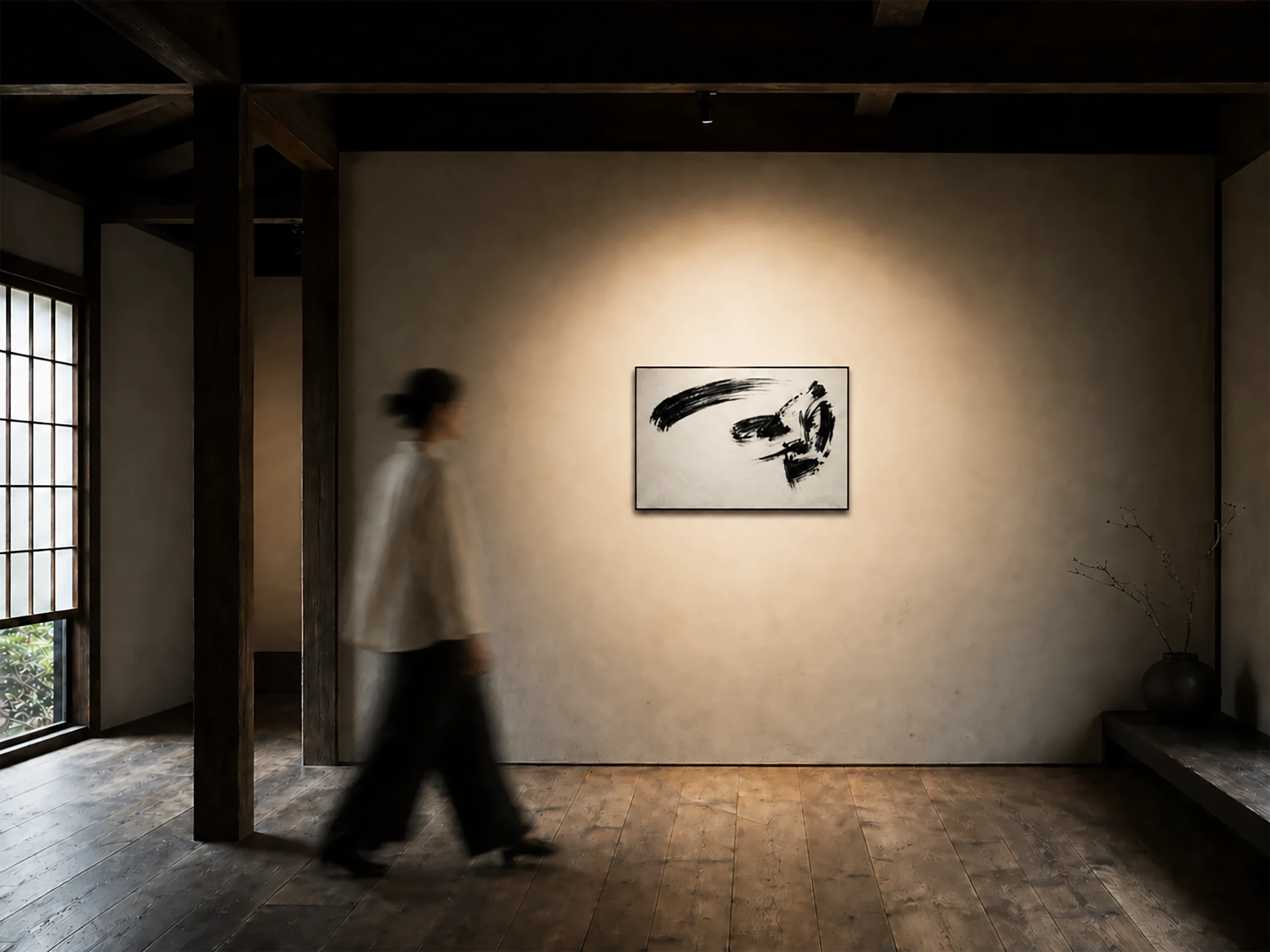
Leaving a Stillness Unique to That Inn
The appeal of an accommodation cannot be measured by the number of facilities alone. How did the person who visited feel, and what kind of time did they carry home — that is what matters.
Art does not exist merely to stand out. It exists to create a quiet axis within a space and to leave behind a value that words cannot fully convey.
A single work that can be born only in that land, that inn, that space.
Hakurei connects the power of calligraphy to a stay that remains in memory.