NEWS
Hearing the phrase “contemporary art rooted in calligraphy,” not many people may be able to picture a specific work right away.
What is generally called “calligraphy art” or “contemporary calligraphic art” takes many forms.
Powerfully written kanji.
A hanging scroll displayed in a tokonoma alcove.
A calligraphy performance in which the brush is run across a large sheet of paper in a single burst.
Each of these is an important expression that conveys the appeal of calligraphy.
What Hakurei explores, however, is not only making characters look beautiful.
Brushwork, dry-brush texture, bleeding, empty space.
The friction born where the brush meets the paper.
The breath, bodily movement, and emotion of the writer dwelling within a single stroke.
We draw up the sensations that lie deep within calligraphy and open them into a space as contemporary abstract expression.
That is what Hakurei means by “contemporary art rooted in calligraphy.”
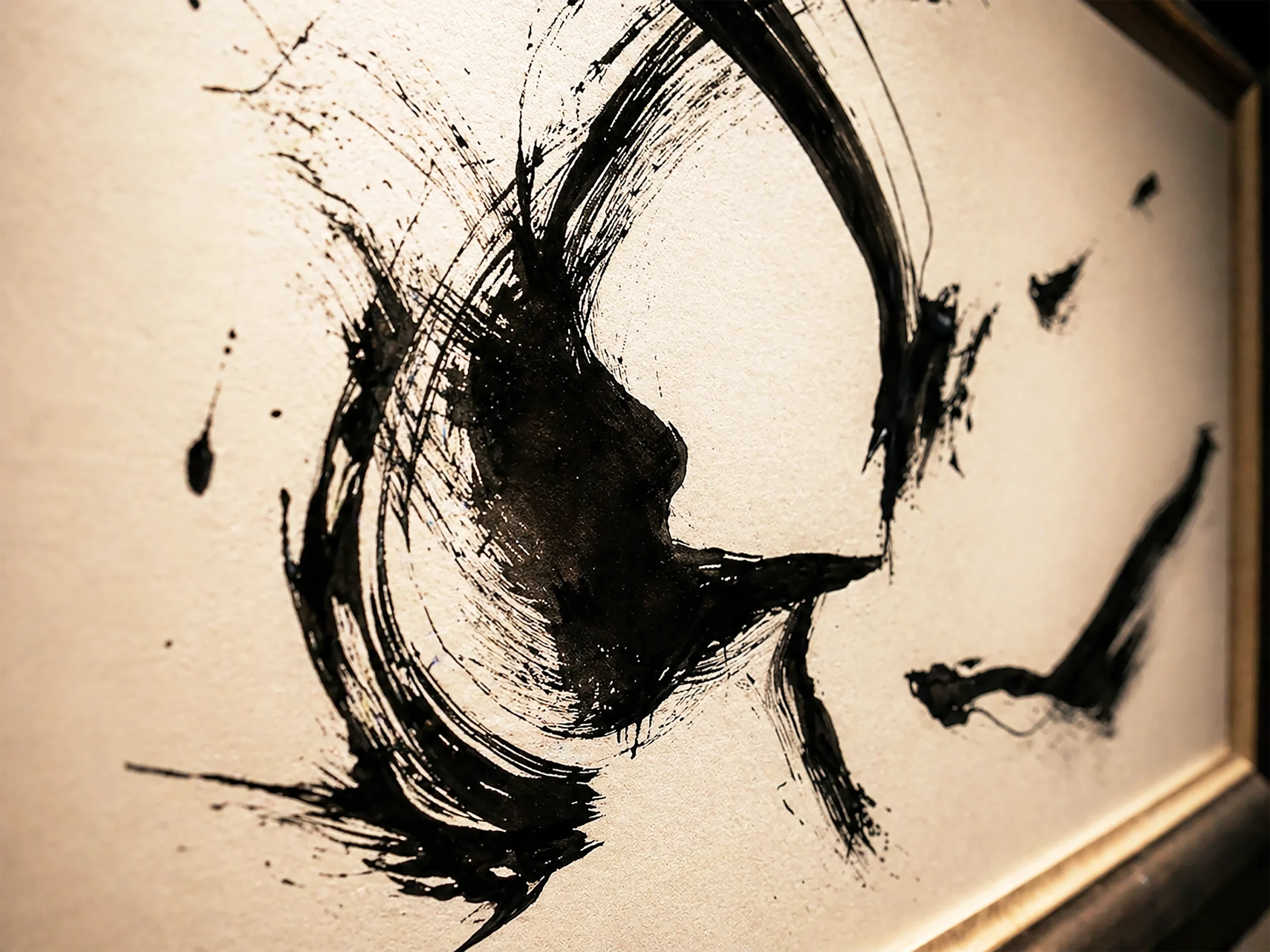
Feeling It Before Reading the Characters
Calligraphy is, by nature, an expression for writing characters.
Yet when we stand before a work, we are not necessarily looking at the characters alone.
From a thin, sharp line, we may feel a taut tension.
From a large, undulating stroke, we may picture the flow of wind or water.
Onto pale, bleeding ink, we may layer the passage of time or something like a distant memory.
Before understanding the meaning of the characters, we receive something from the line itself.
That sensation may be close to music, or to contemporary art.
Even without understanding the lyrics, a melody or rhythm can move the heart.
Even without knowing the context of an artwork, we can be stirred.
Calligraphy, too, through the momentum of a line, the intervals, the shading, and the empty space, can touch emotions that exist before words.
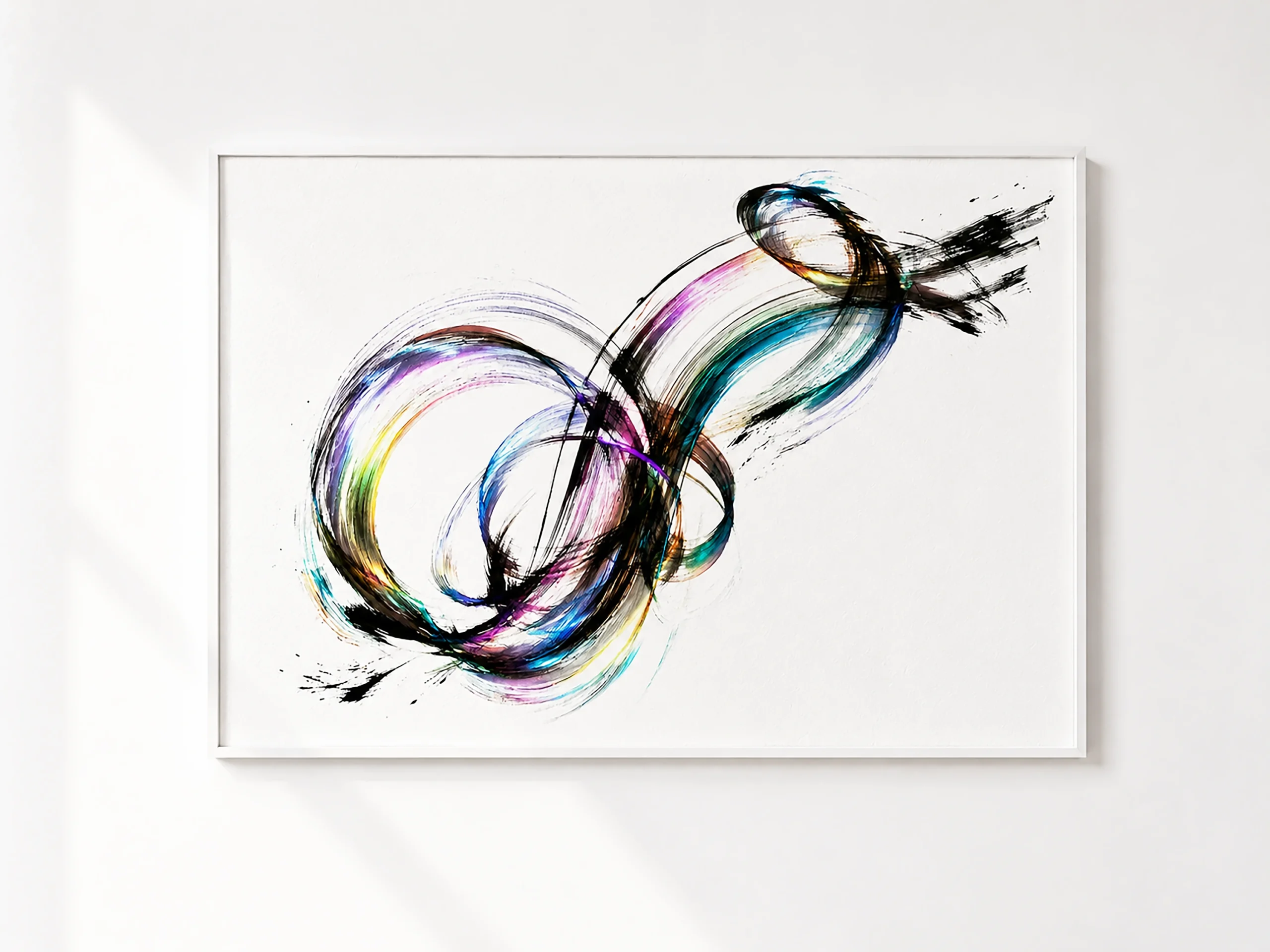
Not Departing from Tradition, but Moving Beyond It
Seeing an abstract expression, you might feel it is “something different from conventional calligraphy.”
But what Hakurei aims for is not to reject tradition.
Rather, it is to engage deeply with the technique and spirituality of calligraphy cultivated over a long history.
How the brush is loaded with ink.
The angle at which the brush enters.
The speed at which a line is drawn.
The moment of releasing force.
How the empty space is composed.
Even the bleeding and dry-brush texture that appear accidental at first glance arise upon the accumulated skill of the calligrapher.
It is precisely because there is form that a tension is born when form is transcended.
It is precisely because one knows tradition that depth dwells in a single line.
Contemporary art rooted in calligraphy does not depart from tradition;
it is an expression that re-examines, for our own age, the essence that lies deep within it.
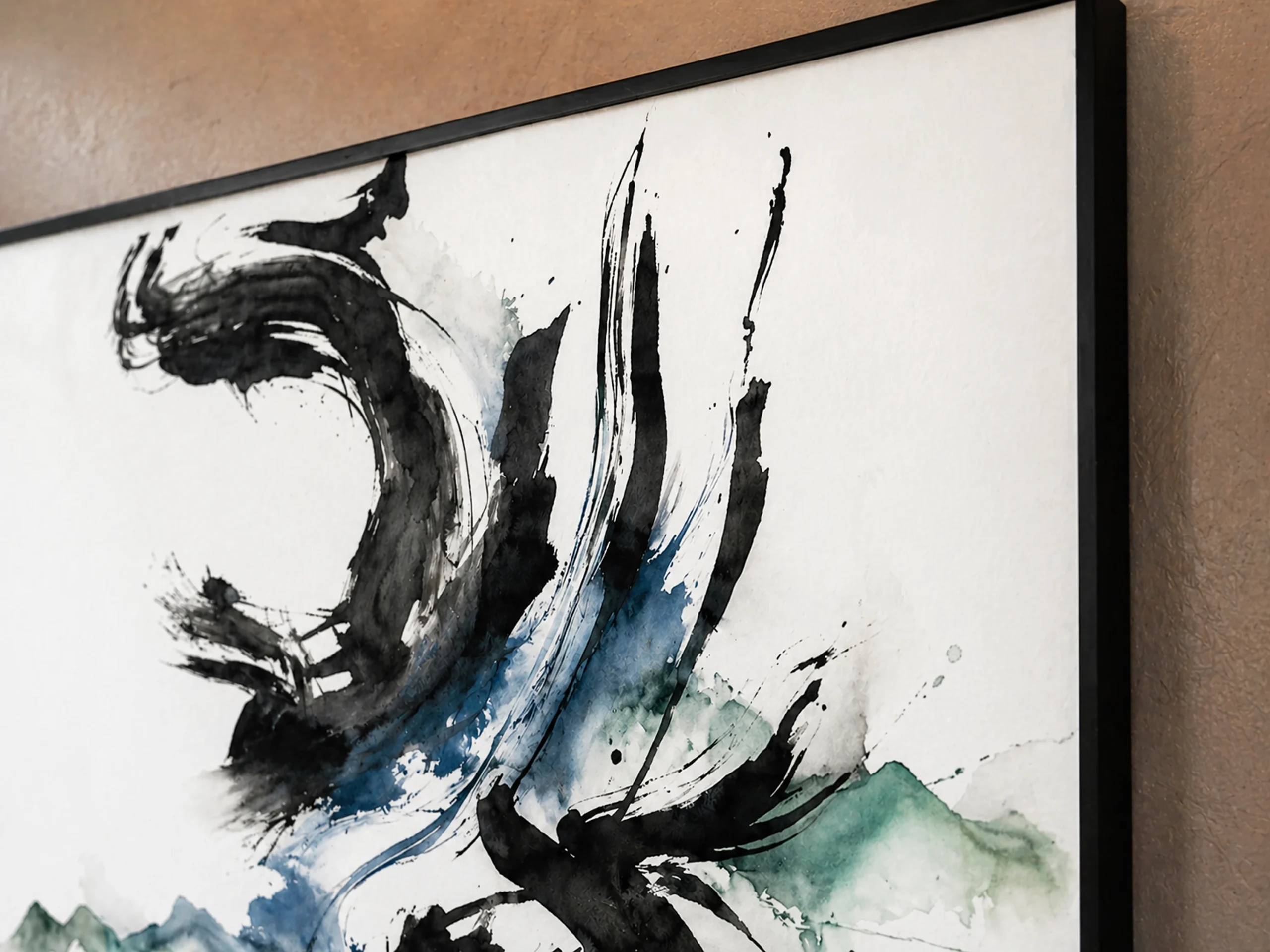
Four Perspectives for Appreciating an Abstract Work
Standing before an abstract work, you may be puzzled, thinking, “I don’t know what it depicts.”
But there is no need to search for the correct answer right away.
Rather than trying to understand a work through knowledge alone, first simply gaze at the lines and the empty space before you.
Here we introduce four perspectives for savoring abstract expression born from calligraphy.
1. Follow the movement of the line
Where does the brush enter, and where is it heading?
A line that dashes through with momentum.
A line that quietly pauses partway.
A line that fades slowly as it dries.
Following it with your eyes, the rhythm flowing through the work comes into view.
A line is not merely a shape.
It is the trace of the writer’s movement in that moment.
2. Look at the shading, bleeding, and dry-brush of the ink
Deep black has strength and weight.
Pale ink has stillness and resonance.
Bleeding and dry-brush are not neatly arranged ornaments.
The amount of ink, the state of the paper, the speed of the brush, the movement of the writer’s body.
Multiple conditions overlap and appear as a fluctuation that cannot be fully controlled.
That element of chance gives the work a sense of life.
3. Turn your eyes to the empty space
A place where nothing is drawn is not merely a blank.
The stillness between one line and another.
The place where the gaze comes to rest.
The interval for settling one’s breath.
It is precisely because there is empty space that the ink lines appear stronger.
When you view a work, try to turn your eyes not only to the parts that are drawn, but also to the parts that are not.
4. Receive the sensation that arises within you
What did you feel on seeing the work?
Calm.
A slight tension.
Nostalgia.
Strength.
For some reason, your gaze will not leave it.
It is fine if you cannot put it into words.
Looking at the same work, one person feels the ridgeline of a mountain, another feels the flow of water.
Someone else may layer onto it an unforgettable memory from their own life.
Appreciation begins where the work and your own memory intersect.
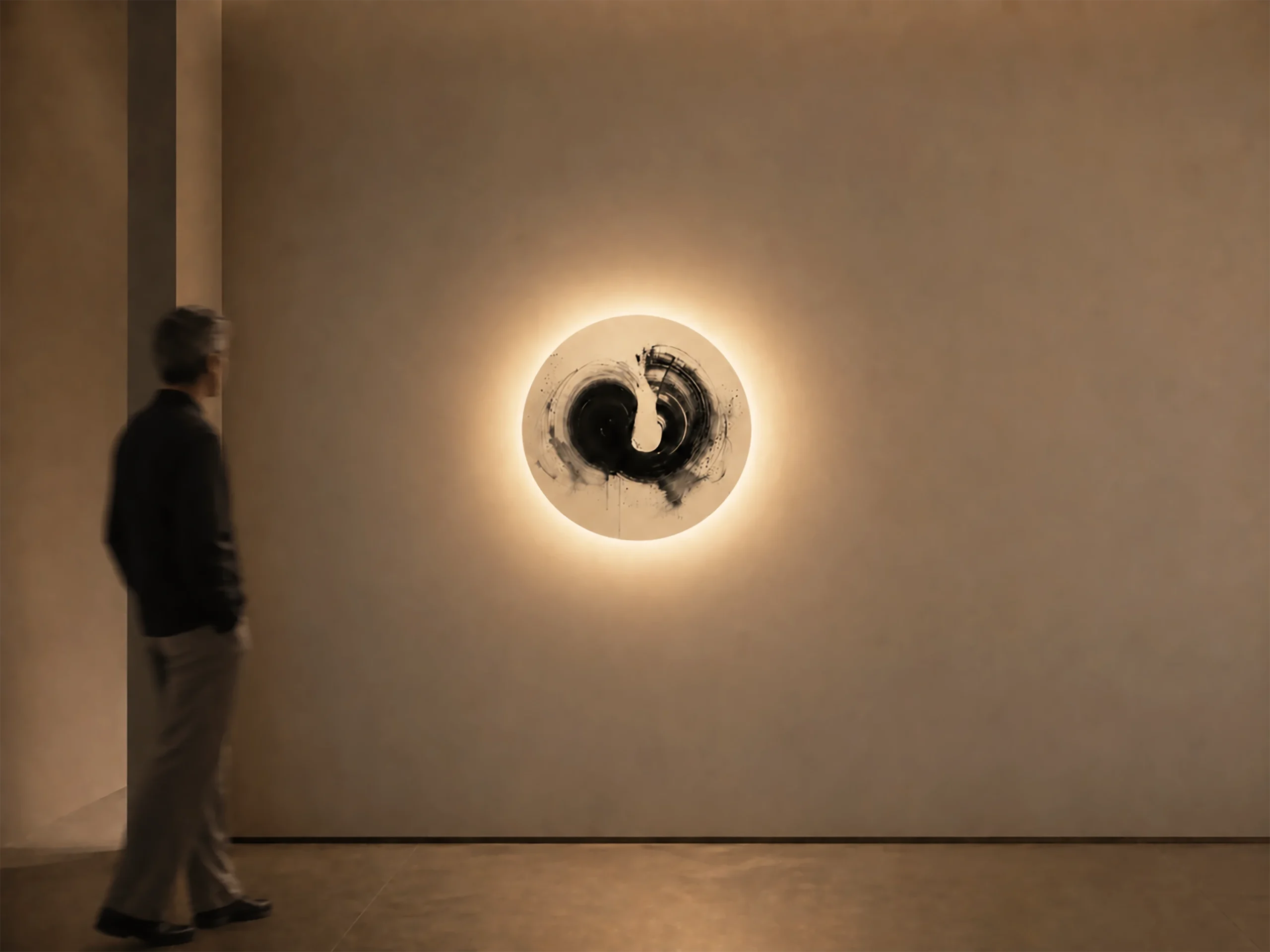
The Expression of a Work Changes with Material and Space
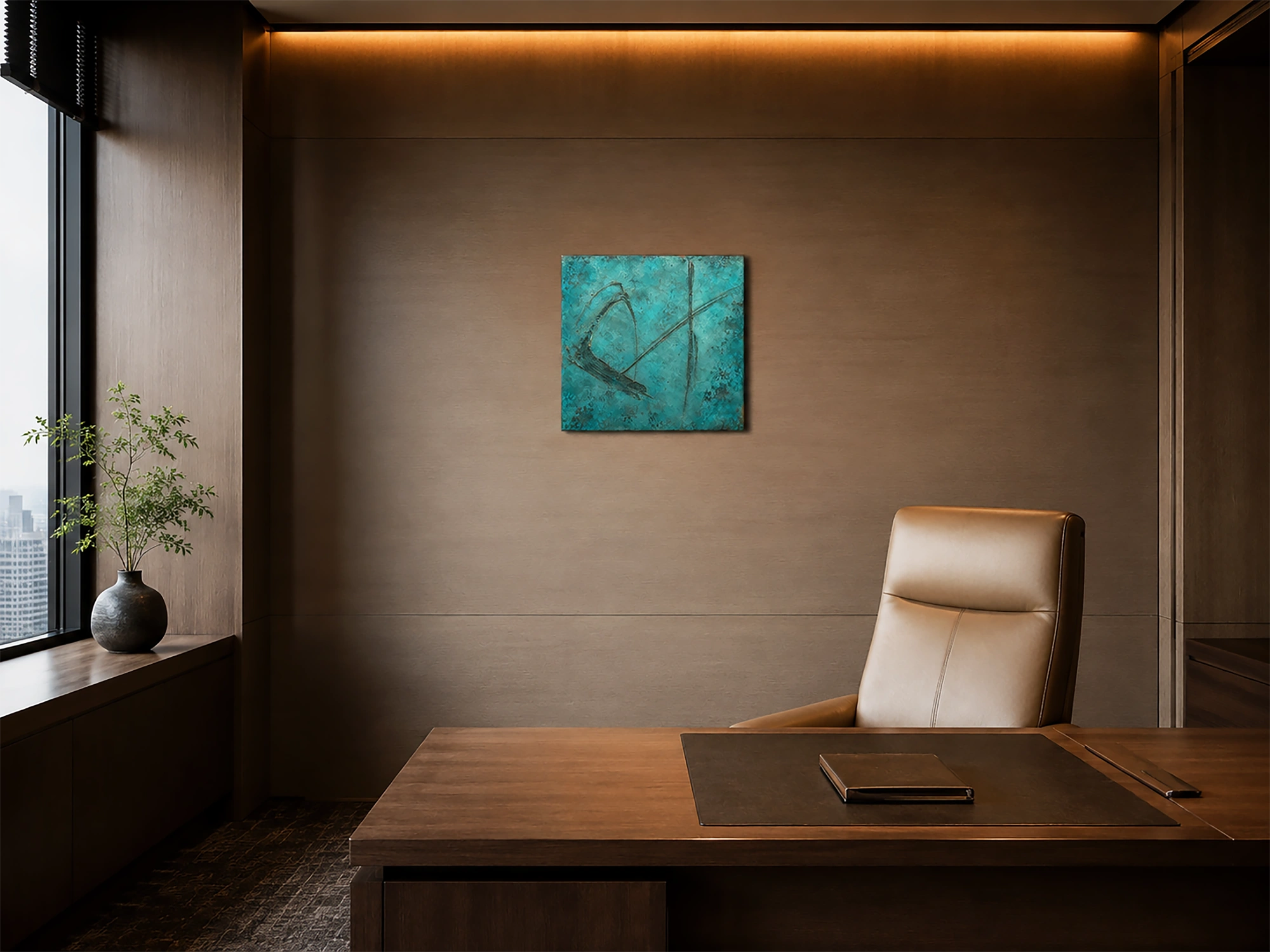
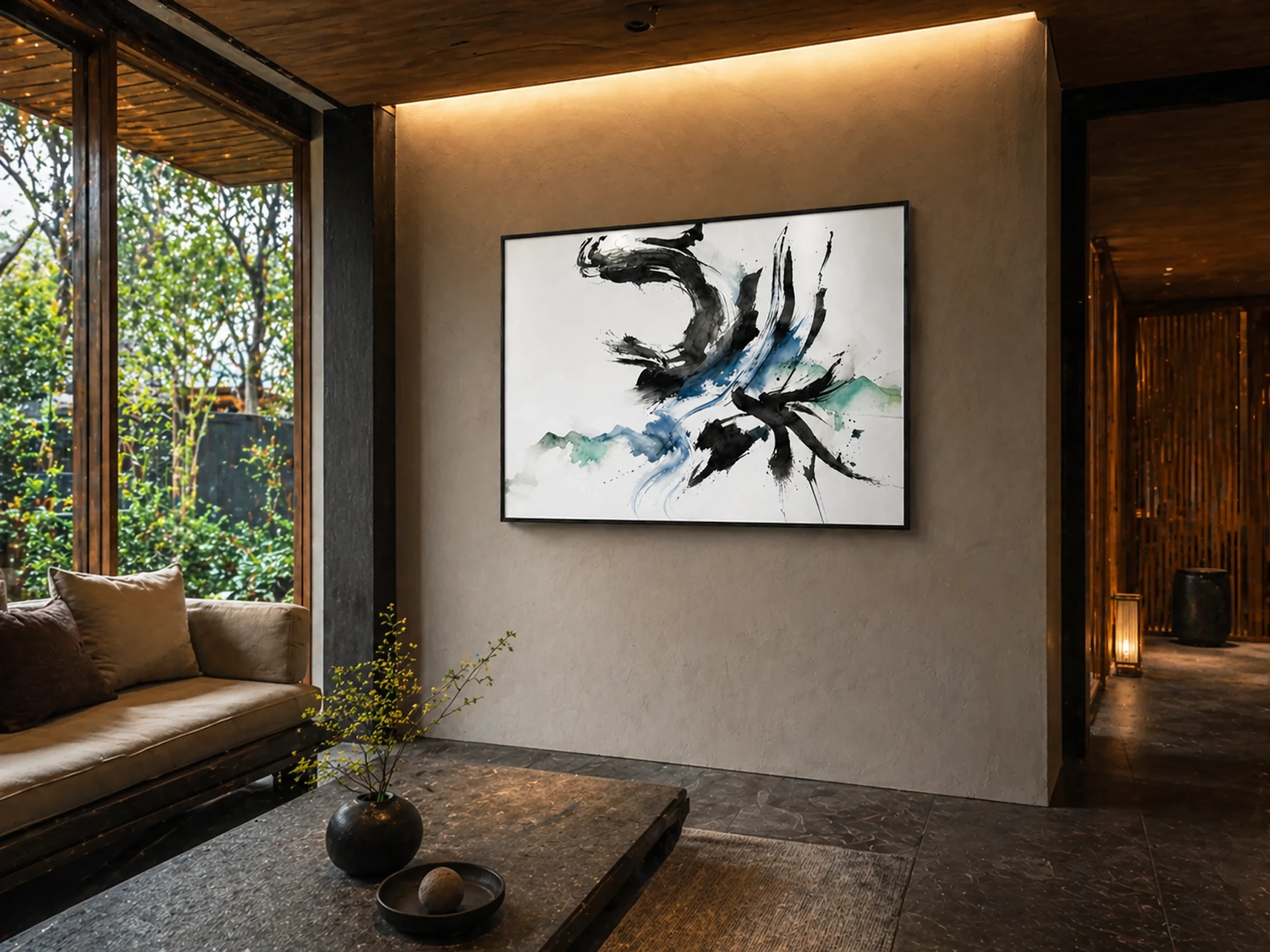
Hakurei does not confine calligraphic expression to the surface of paper alone.
Washi paper, wood, metal, stone, acrylic, light.
When the material changes, the impression of a work changes greatly, even with the same brushwork.
That transformation is also a great joy for us as creators.
Layering ink on washi and letting soft light pass through, a work takes on a presence as if quietly breathing.
Carving a line into a metal surface, the brush movement born in an instant becomes a trace that endures for many years.
The texture of the wall, natural light, lighting, furniture, the distance from the architecture.
A work is not something separated from its space.
Its expression changes between morning and night, and its impression changes with the mood of the viewer.
Placed in a space and accumulating time, a work gradually deepens.
Leaving in a Space What Words Cannot Fully Convey
Hotels and inns have an air that can be felt only in that land.
Companies have the vision of their founders and the history they have built.
Shops carry a wish for the kind of time they want visitors to spend.
Yet the more important something is, the less it can be fully conveyed by words alone.
What Hakurei aims for is not art meant to explain.
The moment you enter the space, you feel something even without knowing why.
As you gaze at it for a while, a quiet resonance remains.
When you happen to look again, an expression different from before comes into view.
We wish to create such works carefully, one stroke at a time.
Not merely reading the characters.
Savoring the time that flows between the ink and the empty space.
That is the contemporary art rooted in calligraphy that Hakurei explores.